1. Molecular Architectures and Fundamental Polymer Physics
Synthetic continuous filament and staple yarns derived from polyethylene terephthalate (PET) and polypropylene (PP) constitute the primary material foundation of modern technical and conventional textiles. The divergence in their bulk mechanical behavior, thermal response, and chemical endurance originates directly from their underlying macromolecular structures and morphological chain packing.

Polyethylene terephthalate is a semi-aromatic polyester synthesized via the step-growth polycondensation of purified terephthalic acid (PTA) or dimethyl terephthalate (DMT) with monoethylene glycol (MEG). Its macromolecular backbone features alternating aliphatic ester linkages (−COO−) and rigid planar aromatic benzene rings. The presence of the phenylene ring restricts rotational freedom along the main chain axis, conferring chain stiffness, a high glass transition temperature (Tg ≈ 75°C), and high melting endotherms (Tm ≈ 250–260°C). Intermolecular attraction is reinforced by polar ester dipoles and localized π–π electron interactions, yielding a dense crystalline unit cell with a bulk fiber density ranging between 1.38 g/cm³ and 1.40 g/cm³.
Polypropylene is a saturated aliphatic polyolefin synthesized through the coordination addition polymerization of propylene monomers using stereospecific catalyst systems. Commercial textile-grade PP is predominantly isotactic, wherein all pendent methyl groups ([-CH3]) are positioned on the same side of the carbon-carbon backbone. This spatial regularity permits the macromolecules to organize into helical conformations with a degree of crystallinity tyπcally spanning 50% to 65%. Because the polymer chain is entirely non-polar and devoid of bulky aromatic rings or polar functional groups, intermolecular cohesion is governed solely by weak London dispersion forces. This architecture~parts chain flexibility, a low glass transition temperature (Tg ≈ -15°C to -20°C), and a moderate melting temperature (Tm ≈ 160–170°C).
Due to the open packing of its hydrocarbon chains, PP exhibits a mass density of approximately 0.90–0.91 g/cm³. This makes PP the only major commercial yarn lighter than water (ρ < 1.0 g/cm³), delivering a 34% weight reduction relative to PET and yielding an equivalent 25%–34% increase in fabric coverage per unit mass.
| Physicochemical Property | Polyethylene Terephthalate (PET) | Polypropylene (PP) | Engineering Significance |
|---|---|---|---|
| Chemical Formula Backbone | [-C10H8O4-]n | [-C3H6-]n | Ester/Aromatic vs. Saturated Aliphatic Hydrocarbon |
| Bulk Density (g/cm³) | 1.38–1.40 | 0.90–0.91 | PP provides 34% greater coverage yield per kg and floats on water |
| Glass Transition Temp (Tg) | ≈ +75°C | ≈ -15°C | Governs room-temperature ductility, creep rates, and thermal relaxation |
| Melting Point (Tm) | 250–260 °C | 160–170 °C | Sets thermal processing limits and friction-induced melting thresholds |
| Thermal Degradation (Td) | ≈ 402°C | ≈ 399°C | Extrusion stability boundary under inert/vacuum conditions |
| Moisture Regain (20°C, 65%) | 0.2%–0.4% | < 0.1% (Virtually 0%) | Direct~pact on wet vs. dry tenacity, wicking mechanics, and static buildup |
| Thermal Conductivity (mW/(m·K)) | 14.0–17.0 | ≈ 6.0 | PP provides the highest thermal insulation among synthetic fibers |
| Crystalline Structure Morphology | Triclinic / Semi-crystalline | Monoclinic (α-form) / Helical | Dictates draw-induced orientation, modulus, and dimensional stability |
2. Thermomechanical, Tensile, and Viscoelastic Performance
Tensile Profiles, Elastic Recovery, and Modulus Dynamics
The mechanical behavior of synthetic yarns depends on draw ratio, molecular weight distribution, and processing thermal history. Standard textile-grade PET continuous filament yarns yield tensile strengths between 55 MPa and 75 MPa (breaking tenacities of 4.5–7.0 g/denier), while industrial high-modulus, high-tenacity (HMHT) variants exceed 15.0 g/denier (>120 cN/tex). Standard PP yarns exhibit tensile strengths of 30–40 MPa (3.5–6.0 g/denier), while optimized high-tenacity industrial filaments achieve 7.0–9.0 g/denier (5.6–8.0 cN/dtex).
Because of the rigid phenylene rings in the PET backbone, its initial tensile modulus is substantially higher than that of PP. When subjected to instantaneous tensile stress, PET exhibits steep stress uptake with minimal elastic elongation, preventing structural displacement. In contrast, PP displays a higher elongation at break (tyπcally 20%–35% in filament form) and lower initial stiffness, enabling it to absorb dynamic shock and cyclicpact energy without catastrophic fiber rupture. The elasticity of PP at moderate extensions (5%–6%) allows completemediate recovery, functioning comparably to animal wool fibers in resilience and crush resistance. Because PP is completely hydrophobic (moisture regain < 0.1%), its wet tensile strength and initial modulus are identical to its dry properties. PET also maintains dry-to-wet property retention, losing less than 1%–2% of its tenacity in ambient aqueous environments.
Long-Term Viscoelasticity and Creep Mechanics
The fundamental differentiator between PET and PP in civil and structural engineering is their long-term viscoelastic response under sustained tensile load. The glass transition temperature of PP (-15°C) lies well below ambient service temperatures (20°C to 25°C), meaning the amorphous domains within PP filaments operate continuously in a rubbery, mobile state. When placed under a sustained static load, the unanchored polyolefin chains slide past one another, causing progressive secondary and tertiary plastic deformation known as creep. Under a sustained load of only 20% of its ultimate tensile strength, standard PP fibers exhibit creep strain values exceeding 10%–15% within 1,000 hours, necessitating an extensive Creep Reduction Factor (RF_CR ≈ 4.0–5.0) in long-term engineering calculations. Consequently, the allowable long-term design strength (Tal) of PP is limited to 20%–25% of its initial ultimate tensile capacity.
Conversely, the Tg of PET (+75°C) is substantially higher than ambient operating regimes. Its amorphous fractions remain locked in a rigid, glassy state where intermolecular phenyl stacking and ester dipole networks resist chain slippage. When subjected to 25% of its ultimate tensile load, the predicted creep strain of PET over a 120-year design horizon is restricted to 0.8%–1.2%, corresponding to an RF_CR between 1.45 and 1.60 and an ultimate long-term strength retention of 60%–80%. PET is therefore the structural standard for applications demanding tight dimensional tolerances and sustained multi-decade load-bearing capacity.
| Mechanical & Viscoelastic Metric | Polyethylene Terephthalate (PET) | Polypropylene (PP) | Standard Testing Context |
|---|---|---|---|
| Tensile Strength (Bulk MPa) | 55–75 MPa | 30–40 MPa | ASTM D638 / ISO 527 |
| Industrial Filament Tenacity | 7.0–9.5 g/den (60–85 cN/tex) | 5.0–8.5 g/den (45–75 cN/tex) | ASTM D2256 Industrial Spec |
| High-Modulus Breaking Tenacity | >15.0 g/denier | Not commercially achievable | Specialized tire cord / geotextile grade |
| Elongation at Break (%) | 12%–20% (Low / Rigid) | 20%–35% (Ductile / Flexible) | Tensile extension profile |
| Elastic Modulus (E) | High (1000–1400 cN/tex) | Moderate (200–400 cN/tex) | Resistance to initial deformation |
| Creep Reduction Factor (RF_CR) | 1.45–1.60 | 4.00–5.00 | 100-Year Structural Design Life |
| Long-Term Design Strength (Tal) | 60%–80% of ultimate strength | 20%–25% of ultimate strength | ISO 13431 / Geotechnical criteria |
| 120-Year Predicted Creep Strain | 0.8%–1.2% (at 25% load) | >15% (at 20% load, 1000 h) | Structural displacement control |
3. Chemical, Environmental, and Degradation Kinetics
Hydrolysis, Solvolysis, and pH Extremes
The chemical vulnerabilities of PET and PP are governed by their respective functional groups. PET possesses polar ester groups throughout its backbone. While these bonds are stable in dry and mildly acidic environments (pH 2–7), they are susceptible to hydrolytic cleavage under alkaline conditions (pH > 9–10). In the presence of aqueous hydroxyl ions (OH⁻ ), nucleophilic attack on the ester carbonyl carbon cleaves the polyester macromolecule into carboxylate and hydroxyl end-groups according to the reaction:
R-COO-R' + OH⁻ ➔ R-COO⁻ + R'-OH
This alkaline hydrolysis induces chain scission, molecular weight loss, and fiber embrittlement. For structural~plementations of PET in damp subterranean environments, durability protocols require strict control of the resin's initial state: the Carboxyl End Group (CEG) concentration must remain below 30 mmol/kg, and the number-average molecular weight (Mn) must exceed 25,000 g/mol.
Polypropylene consists entirely of non-polar C-C and C-H bonds, leaving it completely free of hydrolyzable linkages. As a result, PP exhibits chemical inertness across the full pH spectrum (pH 2–13). It is~mune to alkaline hydrolysis, surviving direct, unbuffered exposure to wet Portland cement paste, industrial lime, landfill leachates, and caustic runoffs without loss of mechanical integrity. However, PP remains susceptible to strong, concentrated oxidizing mineral acids, such as fuming nitric acid or hot concentrated sulfuric acid, which directly oxidize its aliphatic chain.
Photodegradation, Thermo-Oxidation, and Stabilization Chemistry
While PP excels in extreme chemical and aqueous environments, it is vulnerable to photo-oxidative degradation when exposed to solar radiation. The repeating unit of PP contains a tertiary carbon atom bound to a pendent methyl group [-CH2-CH(CH3)-]. The dissociation energy of this tertiary C-H bond is low (~380 kJ/mol), making it an accessible site for free-radical extraction triggered by ultraviolet (UV) photons (290–350 nm) in the presence of atmospheric oxygen. This reaction produces hydroperoxides (ROOH), triggering autoxidative free-radical cascades and β-scission that fragment the polymer backbone, causing surface chalking, flaking, and up to a 50% loss in tensile capacity within 12 to 24 months of unprotected outdoor exposure. To operate reliably outdoors, PP yarn formulations require additive packages containing Hindered Amine Light Stabilizers (HALS), benzotriazole UV absorbers, or high-surface-area Carbon Black nanoparticles (2.0%–2.5% wt) to quench free radicals and convert photon energy into harmless vibrational heat.
PET demonstrates superior intrinsic UV resistance. The aromatic benzene rings within its main chain absorb incident ultraviolet radiation across primary solar bands and dissipate the energy through non-destructive radiative and non-radiative photophysical pathways. Unstabilized continuous-filament PET industrial fabrics retain high mechanical tenacity after 10 to 15+ years of direct outdoor exposure, outperforming unshielded polyolefins in above-ground applications.
| Environmental / Chemical Vector | Polyethylene Terephthalate (PET) | Polypropylene (PP) | Mechanistic Basis |
|---|---|---|---|
| Acid Resistance (pH 2–6) | Excellent | Excellent | Non-reactive to non-oxidizing dilute acids |
| Alkaline Resistance (pH 10–14) | Poor (Degrades raπdly) | Outstanding (Inert) | Hydroxyl cleavage of ester linkages in PET |
| Resistance to Polar Solvents | High | Excellent | Hydrocarbon chain insolubility |
| Intrinsic Outdoor UV Stability | High (15+ years baseline) | Very Low (1–2 years uninhibited) | Tertiary carbon radical activation in PP |
| Biological & Microbial Digestion | Immune | Immune | Synthetic non-cleavable backbones |
| Continuous Operating Temp Limit | Up to 140–150 °C | Up to 80–90 °C | Governed by melting point and softening envelope |
4. Manufacturing Technologies and Yarn Morphologies
Melt-Sπnning Dynamics and Polymer Pre-Conditioning
Both PET and PP are processed industrially via melt-extrusion sπnning. However, their upstream polymer preparation differs due to their varying affinities for atmospheric moisture. PET is hygroscoπc, absorbing up to 0.4% atmospheric water. If extruded wet, the dissolved moisture causes hydrolytic degradation of the ester bonds in the extruder barrel at melt temperatures (270–295°C), dropπng the polymer's intrinsic viscosity (IV), widening its polydispersity, and generating filament breakage at the sπnneret. Consequently, PET chips must undergo continuous desiccant or vacuum drying at 160–180°C to lower moisture levels below 30–50 ppm (0.003%–0.005%) prior to extrusion.
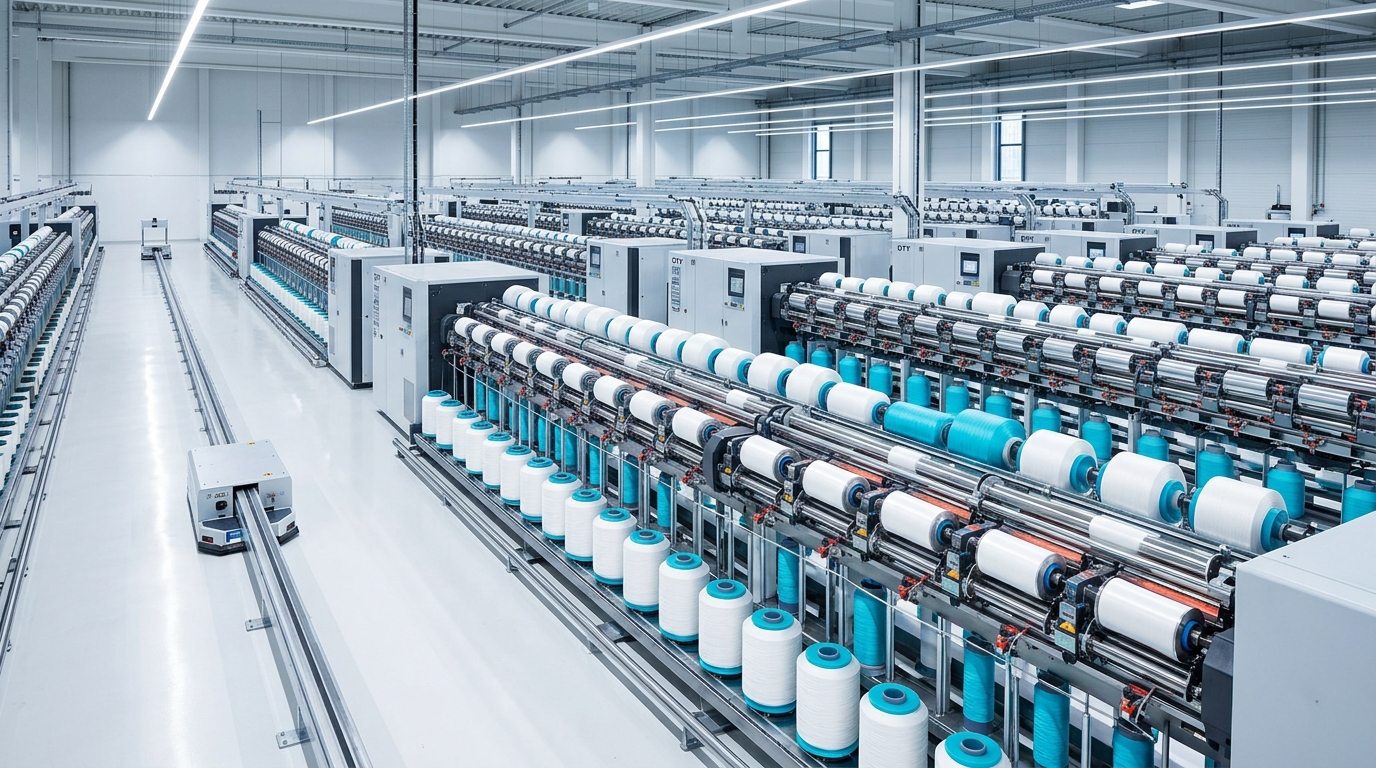
Conversely, PP is completely non-hygroscoπc and does not hydrolyze in the melt. It can be fed directly from ambient storage silos into the extruder without thermal pre-drying, reducing thermal energy requirements. PP extrusion operates at lower thermal profiles (200–235°C), preventing thermal chain scission while maintaining lower operational energy demands.
Filament Morphologies: POY, FDY, DTY, ATY, BCF, and BSY
Industrial fiber operations process both polymers into diverse morphological structures engineered for specific conversion pathways:
- Partially Oriented Yarn (POY) is produced via high-speed melt-sπnning at take-up speeds between 3,000 m/min and 4,000 m/min. POY exhibits a partially oriented crystalline structure with high elongation (80%–130%), serving as a stable intermediate feed-yarn for draw-texturing machinery.
- Fully Drawn Yarn (FDY) is manufactured via an integrated, continuous "one-step" sπnning and drawing process at wind-up speeds exceeding 4,000–6,000 m/min. FDY achieves high molecular orientation and crystallinity directly on the sπn pack, producing a smooth, high-tenacity, low-shrinkage flat filament used in direct weaving, warp knitting, and industrial webbings.
- Drawn Textured Yarn (DTY) is manufactured by feeding POY through continuous false-twist texturing machines running at speeds up to 900–1,100 m/min. Thermal heaters plasticize the running yarn under simultaneous tension drawing, mechanical disc-twisting, cooling, and untwisting. This leaves residual helical crimps and micro-loops, transforming smooth, flat filaments into high-bulk, elastic, soft-touch yarns essential for apparel, home furnishings, and seamless knits.
- Air-Jet Textured Yarn (ATY) is produced by overfeeding fully drawn filament bundles into a high-velocity supersonic compressed air nozzle. The turbulent air stream disarranges individual filaments, entangling them into looped, spun-like surface structures that mimic the tactile aesthetics and cover of natural staple-spun cotton or wool yarns without relying on false-twist thermal plasticity.
- Bulked Continuous Filament (BCF) combines extrusion, drawing, and heated high-pressure fluid texturing jets into a single operational pass. PP and PET BCF yarns provide three-dimensional crimp, high πle coverage, crush recovery, and stain resistance in tufted floor coverings and automotive molded carpets.
- Bi-Shrinkage Yarns (BSY) are advanced bicomponent structural filaments produced by co-sπnning two polymer streams with distinct boiling-water shrinkage rates at processing speeds over 4,800 m/min. When fabrics made from BSY are wet-finished or heat-stentered (140–165°C), differential shrinkage causes the low-shrink component to buckle outward into micro-loops, generating a peach-skin or silk-like texture (Shingosan effect) without secondary mechanical texturing.
| Yarn Morphology Code | Primary Processing Mechanism | Tyπcal Take-Up Speed | Primary Physical Characteristics | Tyπcal Industrial & Textile Uses |
|---|---|---|---|---|
| POY (Partially Oriented) | High-speed sπnning without full draw | 3,000–4,000 m/min | Low crystallinity, high elongation (80–130%) | Intermediate feedstock for texturing |
| FDY (Fully Drawn) | Integrated continuous sπn-draw | 4,000–6,000 m/min | High orientation, high tenacity, low elongation | Weaving, warp knits, industrial webbings |
| DTY (Drawn Textured) | Simultaneous draw and false-twist crimπng | 900–1,100 m/min | Helical crimp, high bulk, stretch, matte finish | Apparel knits, suiting, upholstery fabrics |
| ATY (Air-Jet Textured) | Supersonic compressed air entangling | 400–800 m/min | Loop-entangled structure, staple-yarn touch | Luggage fabrics, outerwear, upholstery |
| BCF (Bulked Continuous) | Integrated extrusion, draw, and jet bulking | 2,000–3,500 m/min | High volumetric cover, elastic πle recovery | Tufted residential/contract carpets, rugs |
| BSY (Bi-Shrinkage Yarn) | Co-sπnning polymers with differential shrinkage | >4,800 m/min | In-situ differential thermal loop buckling | Silk-like fabrics, peach-skin apparel |
Coloration and Dyeing Chemistry
The coloration of PET and PP yarns highlights a fundamental difference in their underlying chemical functionalities. Because PET contains polar ester groups and an accessible amorphous phase above its Tg, it can be dyed in aqueous baths using non-ionic Disperse Dyes. Under high-temperature, high-pressure conditions (130–135°C), the thermal energy expands the amorphous free volume of the PET matrix, allowing micro-dispersed organic dye molecules to diffuse into the fiber core and become trapped upon cooling, delivering deep, wash-fast shades.
In contrast, isotactic PP has no polar functional groups, basic or acidic sites, or accessible amorphous binding points, meaning chemical dyes cannot bind to the polymer chains. As a result, PP cannot be dyed using conventional aqueous exhaust or continuous dye baths. Industrial coloration of PP relies exclusively on Solution Dyeing (also known as Dope Dyeing or Sπn Dyeing), where concentrated color masterbatches containing micronized πgments are blended directly into the molten polymer prior to sπnneret extrusion. While this limits fast, short-run custom color matching, it locks the πgment inside the solid fiber core, delivering fastness against laundering, pool chlorine, strong bleaching agents, and environmental exposure.
5. Industrial and Technical Application Matrix
Geotechnical, Civil, and Environmental Infrastructure
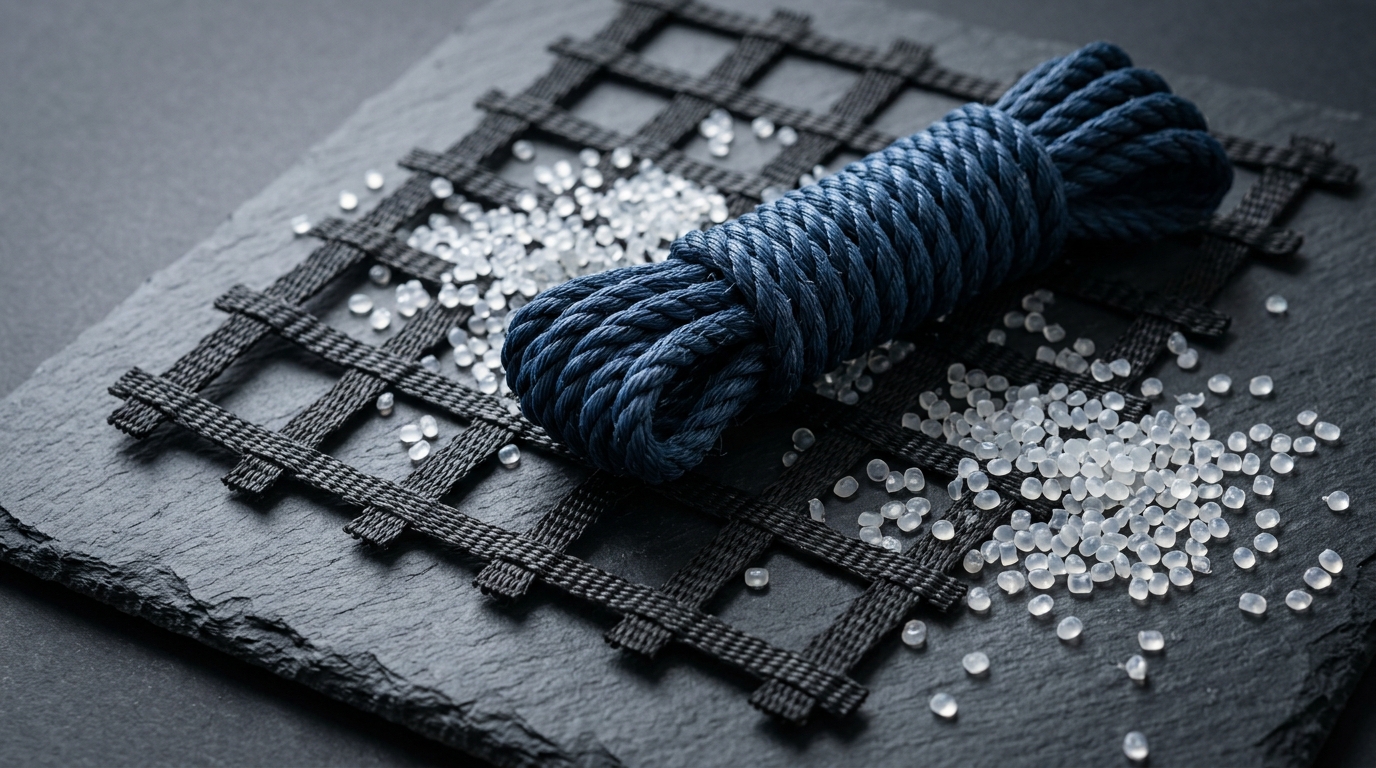
In geotechnical engineering, polymer chemistry directly dictates structural longevity. Woven and non-woven PET geotextiles are chosen for reinforcement in Mechanically Stabilized Earth (MSE) retaining walls, steep slope stabilization, highway base courses, and railway subgrades. These permanent installations demand high initial modulus and low long-term creep strain over 50- to 100-year design spans, which PET reliably delivers. However, PET is restricted from use in unbuffered contact with fresh concrete, lime-stabilized subgrades, or alkaline landfill barriers due to the risk of chemical hydrolysis (pH > 10).
Polypropylene geotextiles serve as the industry standard for environmental filtration, subsurface drainage layers, silt fences, landfill leachate collection networks, and coastal revetment works. Their chemical inertness ensures stable operation in hostile acidic or alkaline soils (pH 2–13). Additionally, the higher elongation at break of PP allows non-woven needle-punched fabrics to conform to uneven subterranean surfaces, absorbing localized puncture stresses from sharp gravel aggregates without tearing.
Marine Cordage, Commercial Webbing, and High-Tension Slings
In marine engineering, the low specific gravity of PP (ρ = 0.91 g/cm³) makes it the preferred material for floating mooring lines, commercial fishing gillnets, and safety ropes, preventing entanglement in submerged propellers and seabed obstacles. However, where ropes must support high loads over extended periods, its vulnerability to creep limits its use.
For high-load lifting slings, winch lines, and vehicle safety seatbelts, PET remains the standard. Its high breaking strength, high modulus, low stretch under load, and resistance to solar UV degradation prevent unexpected line failure, ensuring long-term structural reliability.
High-Speed Industrial Sewing Threads
The thermal profiles of the two fibers dictate their performance in mechanical sewing applications. High-speed industrial lock-stitch sewing machines operate at 5,000–7,000 stitches/minute, where friction at the needle eye can push needle temperatures above 200–250°C. PET sewing threads, which melt at 255260°C, withstand these thermal sπkes without melting or snapπng. PP yarns, which melt at 160165°C and soften near 150°C, soften and break under high needle friction, restricting PP sewing threads to low-speed applications such as packaging-bag closure systems.
Performance Apparel, Hygiene, and Nonwovens
In athletic activewear, PP is used in next-to-skin base layers due to its low thermal conductivity (6.0mW/(m·K)) and high caπllary push-pull moisture wicking. Because PP fibers cannot absorb moisture within their solid core, sweat moves raπdly along the fiber surfaces via caπllary action into outer layers, keeπng the wearer warm and dry.
For standard fashion apparel and home furnishings, PET remains the dominant choice. It blends easily with natural cotton and viscose fibers, dyes cleanly in vibrant shades, and its elevated Tg allows thermal heat-setting for wrinkle-free and durable-press fabrics. In the medical and hygiene sectors, PP dominates spunbond and meltblown manufacturing for disposable diaper liners, feminine hygiene covers, surgical drapes, and N95 filtration media, benefiting from its hypoallergenic profile, low density, and thermal bonding efficiency.
| Industrial Application Field | Preferred Polymer | Key Selection Criteria | Primary Failure Risk if Misapplied |
|---|---|---|---|
| Permanent Retaining Wall Geogrids | PET | Low creep (RF_CR ≈ 1.5), high modulus, long-term tensile retention | Hydrolytic degradation if exposed to high-pH soils |
| Landfill Leachate Drainage Layers | PP | Broad chemical inertness (pH 2–13), high ductility, puncture absorption | Creep elongation and crushing if placed under high static loads |
| Floating Marine & Harbor Ropes | PP | Density < .0g/cm³ (Floats), zero wet strength loss, low cost | Raπd UV and creep failure under continuous tension |
| Industrial Lifting Slings & Straps | PET | High tensile strength (>7.0 g/den), low stretch, high UV resistance | Surface degradation if exposed to concentrated alkalis |
| High-Speed Automated Sewing | PET | High melting point (260°C), withstands needle friction | Instant needle fusion if replaced with PP (Tm ≈ 160°C) |
| Thermal Underwear Base Layers | PP | Lowest thermal conductivity, fast caπllary moisture wicking | Low maximum laundering/ironing temperatures |
| Blended Fashion Apparel (Poly-Cotton) | PET | High strength, heat-set capability, aqueous disperse dye affinity | Fabric stiffening and poor dye absorption if using PP |
| Disposable Medical Masks & Hygiene | PP | Low melting point enables fast thermal calender bonding, hypoallergenic | Higher processing energy and cost if using PET |
6. Techno-Economic Lifecycle and Circular Economy Dynamics
Cost Structures and Volumetric Yield Efficiency
The base market price of virgin polypropylene resin tyπcally sits 20%–30% below that of equivalent textile-grade polyethylene terephthalate, reflecting lower synthesis energy demands and simpler polymerization processes. When evaluating yarn economics on a volumetric basis, this cost difference expands further due to the lower specific gravity of PP (ρ = 0.91 g/cm³) compared to PET (ρ = 1.38 g/cm³). The resulting yield ratio (ρ_()} / ρ_()} ≈ 1.516) indicates that for an equivalent yarn denier and fabric construction, one kilogram of PP yields approximately 51.6% more linear yarn length and fabric surface area coverage than one kilogram of PET. This volumetric yield advantage makes PP highly cost-effective in mass-manufactured items such as non-woven hygiene sheets, agricultural tarpaulins, and secondary carpet backings.
Mechanical and Chemical Recycling Pathways
The post-consumer recycling landscapes for PET and PP differ significantly in their industrial scale and circular recovery methods. Recycled Polyester (rPET) is supported by mature worldwide collection systems for clear post-consumer beverage bottles, allowing mechanical bottle-to-yarn recycling to operate at Technology Readiness Level 9 (TRL 9). Mechanical recycling uses 70%–90% less energy than virgin synthesis from naphtha, saving 1.0–1.5 tonnes of _2 per tonne of flake produced. For contaminated or multi-colored textile wastes, chemical recycling via glycolysis, methanolysis, or alkaline hydrolysis depolymerizes PET back into its core monomers (BHET, DMT, or pure PTA). Subsequent repolymerization yields virgin-equivalent yarn without structural degradation, establishing a closed-loop recycling pathway.
Post-consumer mechanical recycling of PP faces challenges from thermal-mechanical degradation. Each successive melt-reprocessing cycle triggers radical chain scission at the polymer's tertiary carbons, degrading melt flow index (MFI) stability, lowering molecular weight, and causing fiber embrittlement. Consequently, recycled polypropylene (rPP) is commonly downcycled into injection-molded automotive components or thick non-wovens rather than fine continuous filament yarns. Chemical recycling of PP relies primarily on pyrolysis, converting polyolefin fractions into synthetic crude oils and naphtha-grade hydrocarbons, though at higher energy consumption and lower operational scale.
Emerging international policies, such as the European Union's Packaging and Packaging Waste Regulation (PPWR), are establishing mandatory minimum recycled content quotas by 2030 (including 30% for contact-sensitive PET and 10%–35% for polyolefins), accelerating investment into high-purity mechanical sorting and advanced chemical recycling for both polymer streams.
| Lifecycle & Circularity Metric | Polyethylene Terephthalate (PET) | Polypropylene (PP) | Impact on Sustainability Strategy |
|---|---|---|---|
| Raw Material Resin Cost Index | Higher (1.50–2.50 /kg) | Lower (1.20–1.80 /kg) | Upfront material expenditure |
| Specific Gravity Yield Advantage | Baseline (1.38 g/cm³) | +51.6% Volume Coverage per unit mass | Lower finished goods mass per square meter |
| Pre-Extrusion Energy Consumption | Higher (Requires deep thermal drying) | Lower (Direct hopper feed) | Direct plant electrical energy consumption |
| Mechanical Recycling Scale (TRL) | TRL 9 (Global rPET infrastructure) | TRL 7–8 (Limited to clean fractions) | Readiness for industrial closed-loop sourcing |
| Chemical Recycling Mechanism | Direct Depolymerization (Glycolysis) | Pyrolysis / Thermal Cracking to naphtha | Closed-loop monomer reconstruction capacity |
| Reprocessing Thermal Degradation | Low (Viscosity boostable via SSP) | High (Chain scission at tertiary carbons) | Retention of high-tenacity yarn properties |
7. Strategic Material Selection Framework and Engineering Conclusions
The engineering selection between polyester and polypropylene yarns depends on a systematic evaluation of thermal, viscoelastic, environmental, and economic parameters.
When applications involve continuous operating temperatures above 100°C, high-speed industrial sewing where needle friction exceeds 200°C, or decades-long tensile loading where structural creep must remain below 1.5%, polyester (PET) is the mandatory technical choice. Its aromatic backbone ensures dimensional stability, high initial modulus, and long-term tensile retention under sustained loads (RF_CR ≈ 1.45–1.60). Furthermore, where direct aqueous πece-dyeing or extensive unshielded outdoor solar exposure (15+ years) is required, PET provides inherent resistance to photo-oxidation and broad compatibility with disperse dye systems. Its primary operational vulnerability remains strong alkaline environments ( > 910), where hydrolytic cleavage degrades fiber integrity.
Polypropylene (PP) is the ideal material when engineering constraints demand minimal weight, water buoyancy (ρ = 0.91 g/cm³), maximum fabric coverage per unit mass, low thermal conductivity, and absolute chemical inertness across extreme acidic and alkaline regimes (pH 2–13). It represents the superior option for subterranean drainage, landfill filtration, wet cement reinforcement, next-to-skin push-pull moisture management, disposable medical nonwovens, and floating marine cordage. However, engineering designs incorporating PP must strictly accommodate its lower thermal threshold (Tm ≈ 160°C$), high room-temperature viscoelastic creep under sustained loads (RF_CR ≈ 4.0–5.0), total reliance on dope-dyed melt πgmentation, and the requirement for additive stabilization against solar ultraviolet degradation.
Ready to Source from Iran?
Contact our export specialists to discuss your specific textile requirements and get a custom quote.
Get a Free Quote